

$0.00

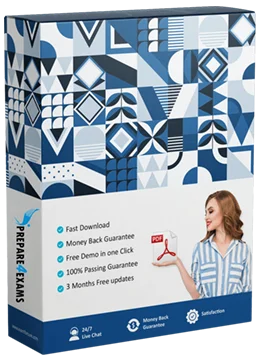
How Prepare4Exams Works: From Search to Certification in 4 Steps
Getting exam-ready shouldn't involve guesswork about what happens after you land on a product page. Here's the exact process, from first search to test day:
Find your exam. Search by vendor — Microsoft, Cisco, Amazon, Google, and others — or jump straight to an exam code, such as AZ-104 or 200-301, using the category browser.
Preview before you buy. Download the free demo for that exam code to check question style, topic coverage, and formatting against the vendor's published exam objectives — before spending anything.
Pick your format. Choose a downloadable PDF for offline study, an online testing engine for timed practice, or both in a single package.
Practice, review, and retake. Work through questions, read the explanation for every wrong answer (not just the right one), and re-run mock exams until your score is consistently at or above a pass-ready level.
There's no subscription trap and no hidden step between browsing and studying — what you preview in the demo is the same structure you get after purchase.
What's Included in Every Exam Prep Package
Every exam package on Prepare4Exams is built around the same core components, so you know exactly what you're getting before checkout:
Practice questions mapped to the current published exam blueprint for that specific exam code — not generic, topic-adjacent content.
A downloadable PDF for offline, print-friendly review — no login or internet connection required once downloaded.
An online testing engine that simulates timed, scored, exam-day conditions.
Answer explanations for every question — covering why the correct option is right and why the others aren't, so you're building understanding rather than pattern-matching.
A free demo of real package content, available before purchase.
Multi-device access — PDF works on any device; the testing engine runs in-browser on desktop, laptop, or tablet.
PDF Study Guide vs. Online Testing Engine: Which Format Fits Your Study Style?
Both formats use the same underlying question set — the difference is how you interact with it.
PDF Study Guide:
Best For: Offline reading, annotating, printing
Access: Download once, use anywhere, no connection needed
Format: Static question list with explanations
Progress Tracking: Self-tracked
Ideal For: Commuters, note-takers, print-preference learners
Online Testing Engine:
Best For: Timed practice under exam-like conditions
Access: Browser-based; requires internet access
Format: Interactive, scored, exam-simulation mode
Progress Tracking: Automatic scoring and retake history
Ideal For: Candidates rehearsing time management before test day
Which should you choose? If you're still learning the material, start with the PDF so you can slow down, look things up, and annotate. Once you're comfortable with the content, switch to the testing engine to rehearse pacing and pressure — most candidates get the most value from using both in sequence rather than picking just one.
Why Certification Preparation Pays Off: What the Data Shows
Certification prep isn't just about passing a test — the outcomes tend to show up in careers, too. In Pearson VUE's 2025 Value of IT Certification Candidate Report, which surveyed close to 24,000 IT professionals who had prepared for and earned certifications, most respondents linked certification directly to career movement: a large majority said the credential gave them more confidence to pursue new roles, well over half reported a resulting promotion, and roughly a third saw a direct salary increase — with many of those raises exceeding 20%. Most of the pay increases arrived quickly, with the majority landing within six months of certifying.
None of that comes from the certificate alone — it comes from being ready to demonstrate the knowledge the certificate represents. Structured practice — working through realistic questions, timing yourself under exam conditions, and reviewing why an answer was wrong — is one of the most consistent ways candidates close the gap between "studied the material" and "passed on exam day."
How We Keep Practice Questions Updated and Relevant
Outdated content is the single biggest complaint about exam prep resources — vendors retire exam versions, update objectives, and rename exam codes regularly, and prep material has to keep pace.
Question sets are mapped to the currently published exam blueprint for each exam code listed on Prepare4Exams.com.
The free demo reflects live package content, not separate sample material, so what you preview is what you'd receive.
If you're ever unsure whether a package matches the current exam version, check the vendor's official exam page for the latest objectives before purchasing, and use the free demo to confirm alignment.
Which Certification Should You Start With? Paths by Career Goal
Certification paths generally build from foundational to specialized. A rough starting map by career direction:
Cloud infrastructure: Start with a foundational credential (e.g., AWS Cloud Practitioner, Microsoft AZ-900, Google Cloud Digital Leader), then move to an associate-level architecture or admin exam (AWS Solutions Architect – Associate, AZ-104) before specializing.
Networking: Cisco's CCNA (200-301) is the standard entry point before moving toward specialist tracks like security or service provider networking.
Cybersecurity: Foundational cloud or networking knowledge first, then a security-focused credential (e.g., AZ-500, security-specialty tracks) once you have infrastructure fundamentals in place.
Data & AI: Start with a data fundamentals exam (e.g., DP-900-equivalent, AI-900) before moving into data engineering or AI-specialist tracks.
Project & delivery management: Scrum or Agile fundamentals (e.g., PSM-I) are a common entry point before pursuing vendor-specific delivery certifications.
Within any track, moving from foundational → associate → professional/specialist generally mirrors how employers expect skills to build, so it's worth mapping your target job description against the certification level before committing.
Start Practicing Today
You don't need to commit before you know what you're getting. Search your exam code, download the free demo, and compare it against the current exam objectives — then decide whether the PDF, the testing engine, or both fit how you study best.


Copyright © 2026
Prepare4Exams. All rights reserved.